We put learning on its feet.
“Everyone in education now agrees that pupil engagement matters. The government’s white paper, Every Child Achieving and Thriving, makes it one of three central shifts, from withdrawn to engaged, and expects every school to be monitoring it by 2029. What almost nobody answers is how. Creativity is the how. When children create something, they are inside the learning, not watching it. That is genuine engagement. And creativity is the skill their futures will demand.”
How does it happen?
They get on their feet. The lesson starts on its feet. Children stand up, move, take a side, make a shape. A child who is moving is already taking part.
They create the answer. The class creates something from the facts: a debate, a poem, a song, a scene, a design. To create it, they have to understand it. To understand it, they have to work it out together.
In a room where it is safe to be wrong. There are no wrong ideas, only ones to work with. Speak, listen, decide together, try it, get it wrong, go again.
And it sticks. What a child has created and performed, a child remembers. The subject goes deeper, because they have done it, not because they have been told about it. Teachers call it stickability.
Knowledge first. The subject leads and the art serves. The class covers what it would have covered. What changes is how it gets there.
The teacher’s role. AI is a fundamental shift, and the answer to it is human. The teacher guides the inquiry, and our creative facilitators work alongside them. By the end of the week the method is the teacher’s own.
Grounded in research
Our approach builds on the University of Winchester’s Teaching for Creativity research. In its Creativity Collaborative, one of eight in a national programme funded by Arts Council England, academics and teachers co-developed the Creativity Navigator. It helps teachers plan lessons that meet curriculum goals while building creative habits: the dispositions that make people better learners and more capable human beings.
Creativity and standards are not rivals. Researchers at the University of Winchester’s Centre for Real-World Learning, writing for the OECD, put it plainly: “It is certainly feasible both to cultivate creative dispositions and to raise achievement levels in subjects.” Lucas, Claxton and Spencer, 2013.
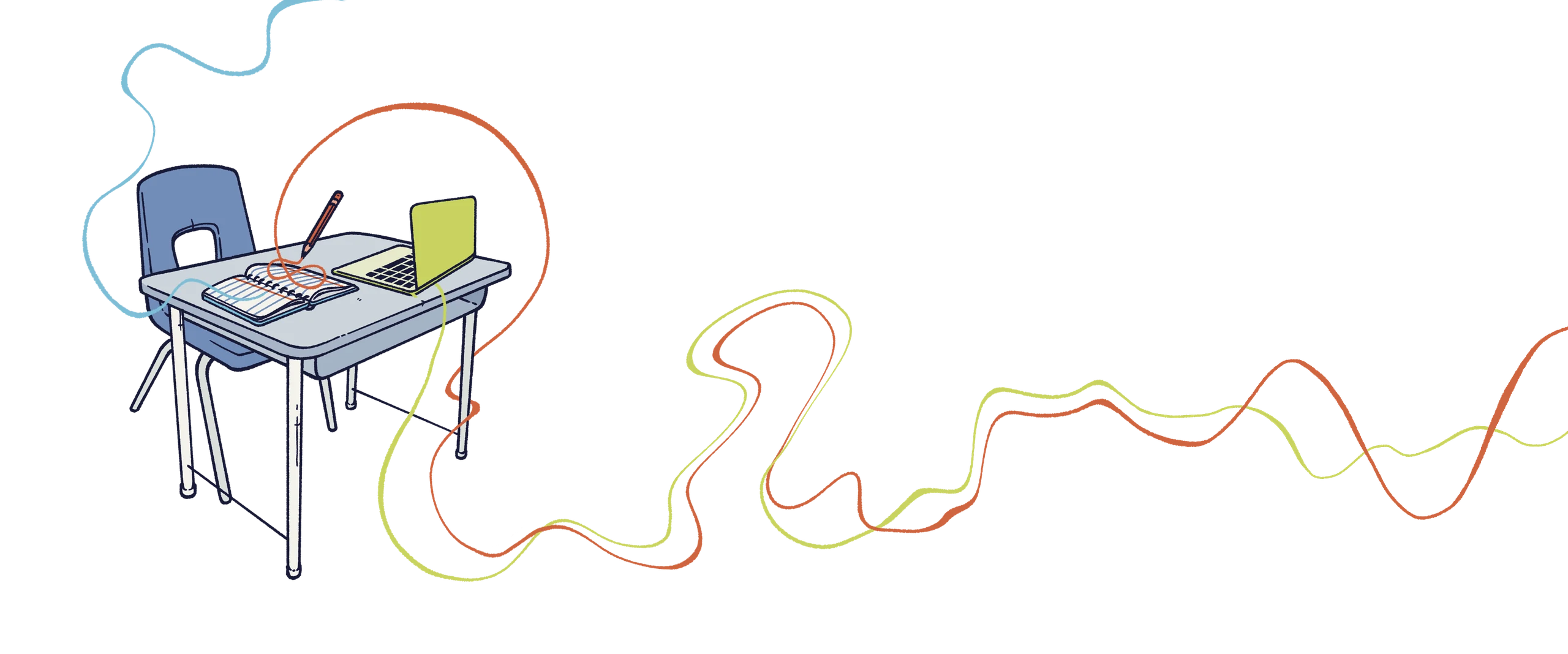
The six steps of Creative Ignition
Six steps, every time.
1. A subject arrives. A school picks a topic already on the curriculum.
2. Outcomes are agreed together. The teacher sets the learning objectives. We choose the art form to serve them.
3. Our creative facilitators translate it. One of our creative facilitators comes in for one to five days and teaches it with the class teacher, through drama, music, art, dance, debate or writing.
4. Everyone learns by creating. A debate, a song, a scene, a design, built from the subject.
5. The work is shared. Shown to the school or to families. The children say what they worked out, and why.
6. The tools and habits stay. The teacher keeps the method, the confidence and a step-by-step toolkit for the subject they chose.
We leave. The method stays.
“Humans are special in every way, and AI can’t stop that.”
Read the full argument
Perspective
Why we don’t ignite machines.
Everyone who enables learning is being asked to do more than ever: make sense of AI, hold attention in a distracted age, and reach every kind of learner, inside a crowded timetable, a packed training day, an evening given up to learn. Creative Ignition works alongside them, putting the creative arts at the heart of learning. Not as decoration, but as the way learning happens. Here is how, plainly.